
City-cell pilot
A city-cell pilot tests one local participation question at a time.
A bounded pilot needs a named population, accountable owners, privacy and safeguarding review, measurable learning and an explicit decision after the test.
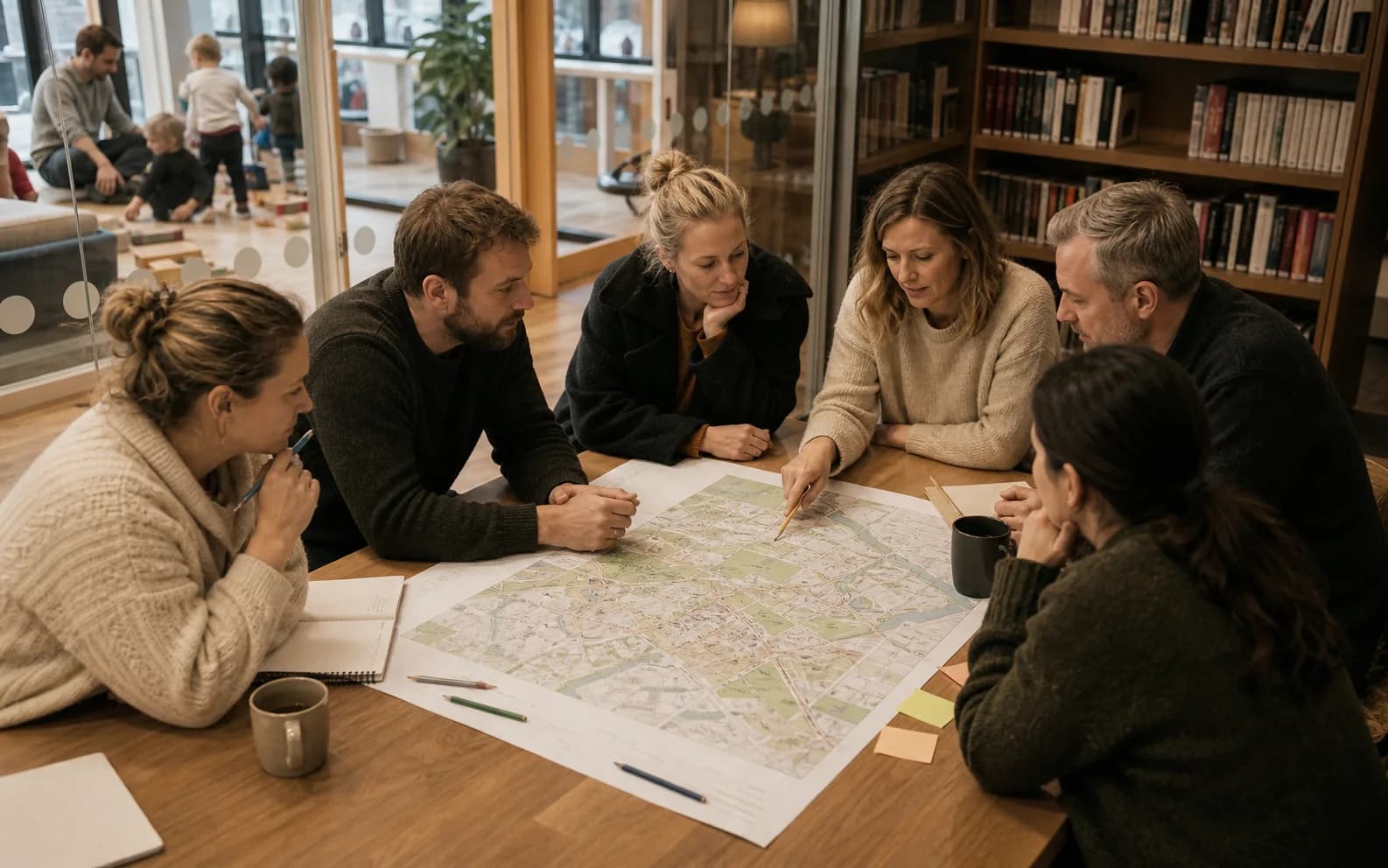


A useful pilot is small enough to understand what changed and why.
Governance, participant care and operating capacity must be ready before recruitment begins.
The outcome should be a documented decision to proceed, narrow, redesign or stop.
One place, one question
A useful pilot is small enough to understand what changed and why.
The pilot should define a place, time period, participant group, opportunity set and one primary question, such as whether clearer first-visit information helps families complete a chosen participation journey. It should not attempt to validate the whole ecosystem at once.
Selection must reflect the local problem and include enough variation to expose exclusion, workload and information-quality risks. The scope should state what Huddle will provide, what organisations and the municipality remain responsible for, and what is explicitly outside the pilot.
Conditions before fieldwork
Governance, participant care and operating capacity must be ready before recruitment begins.
The parties need an approved protocol covering purpose, roles, recruitment, consent, support, data minimisation, safeguarding, information quality, incidents, withdrawal and communication. Organisations need a realistic way to maintain opportunity information throughout the test.
Success and stop conditions should be agreed in advance. The pilot must be paused or narrowed if families misunderstand the service, information becomes unreliable, workloads are not sustainable, privacy boundaries fail or the intended public question cannot be answered.

Evidence and next decision
The outcome should be a documented decision to proceed, narrow, redesign or stop.
Evaluation should report who took part, what was tested, data limitations, family experience, provider workload, information quality, safety and privacy findings, distribution of results and unresolved risks. Positive feedback alone is not evidence of participation impact.
No active Oslo or municipal pilot, partnership, procurement, deployment or measured public value is claimed. Interest in a pilot begins a feasibility and governance discussion; it does not commit either party to implementation or future purchase.